AtlantiCare Emergency Medical Services Expands Whole Blood Treatment on Mobile Intensive Care Units Across Southeastern New Jersey
March 6, 2026
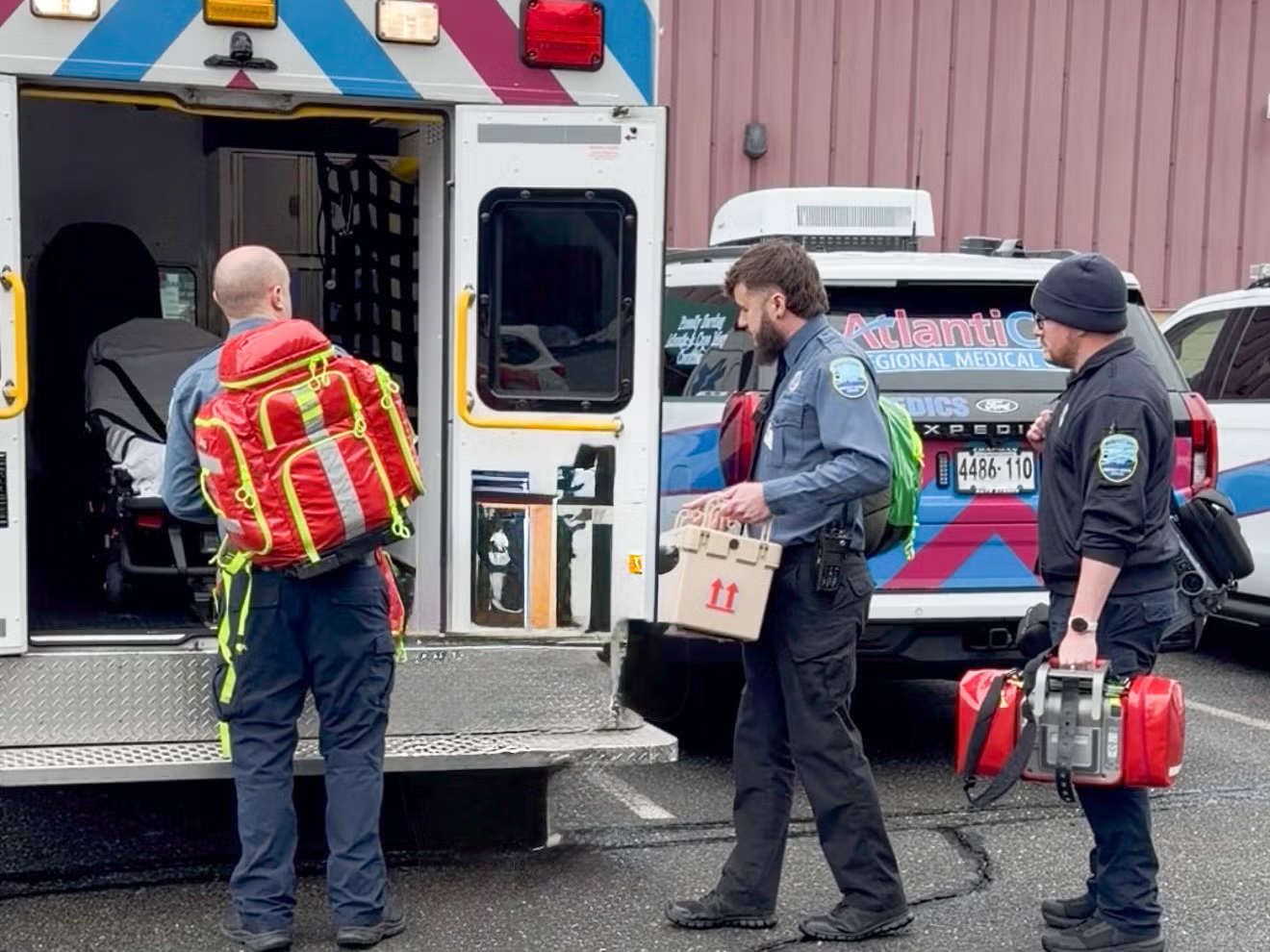
When a patient is experiencing severe blood loss after a crash, fall or other traumatic injury, survival often depends on what happens in the first few minutes. Severe hemorrhage is one of the leading causes of preventable death after trauma, and historically, paramedics could control bleeding and transport rapidly, but definitive blood replacement began only after hospital arrival.
AtlantiCare EMS has expanded its prehospital capabilities with the launch of its Ground Whole Blood Program, enabling paramedics to administer whole blood transfusions directly at the scene of emergencies. AtlantiCare is among a small number of Advanced Life Support EMS programs in New Jersey approved to administer whole blood in the field and the only provider offering this capability in southeastern New Jersey. Whole blood is carried on AtlantiCare’s Mobile Intensive Care Units (MICUs), the paramedic-staffed units that respond to the region’s highest-acuity emergencies.
The impact is significant for a region that depends on rapid emergency response. In 2025 alone, AtlantiCare paramedics responded to nearly 27,000 Advanced Life Support calls for help, bringing advanced medical care to homes, roadways, workplaces and shore communities across southeastern New Jersey. AtlantiCare serves more than one million residents year-round and operates a Level II Trauma Center providing advanced surgical and critical care. From June through September, millions of seasonal visitors increase demand for emergency services throughout the region.
“This is a major advancement in how we deliver trauma care,” said Steve Napoli, Assistant Vice President and Chief of EMS for AtlantiCare. “We are not simply transporting patients to the hospital. We are initiating hospital level resuscitation at the scene. For someone experiencing severe blood loss, that earlier intervention can dramatically improve the likelihood of survival.”
With whole blood now available on MICUs, transfusion can begin within minutes of arrival on scene. Research consistently shows that earlier blood administration improves survival rates and reduces the total number of transfusions required during hospitalization. The American College of Surgeons estimates that expanded access to prehospital whole blood programs nationwide could save up to 10,000 lives each year.
“In cases of hemorrhagic shock, every minute matters,” said Brett Greenfield, DO, FACEOEP, FAEMS and Medical Director for AtlantiCare EMS and JeffSTAT4. “The body can only compensate for a short time before vital organs begin to fail. The ability to provide blood transfusions in the field allows our teams to intervene earlier and substantially improve a patient’s chance of survival.”
The Ground Whole Blood Program represents more than a year of planning, regulatory approval and clinical training. More than 100 paramedics completed specialized education in blood storage, handling and transfusion protocols. AtlantiCare has also invested in portable refrigeration units and remote monitoring systems to ensure strict temperature control and patient safety.
The program operates in coordination with AtlantiCare’s hospital blood bank, which oversees procurement, storage standards, inventory management and regulatory compliance. Whole blood deployed on ground units is supplied, rotated and monitored under the same protocols used within the hospital, extending transfusion medicine standards into the field with strict oversight and accountability.
“We recognize the responsibility that comes with carrying this resource,” said Mark Jeffries, Director and Assistant Chief, AtlantiCare EMS. “Each unit represents the generosity of someone in our community. Our teams are trained to protect it, manage it responsibly and administer it safely in cases of life-threatening hemorrhage.”
AtlantiCare’s air medical program, JeffSTAT4, previously received approval to administer whole blood during transport. The addition of MICU’s capability significantly expands access, ensuring that advanced resuscitation can begin whether a patient is reached by ambulance or helicopter.
By integrating whole blood across its EMS system, AtlantiCare continues to strengthen trauma care delivery throughout southeastern New Jersey, ensuring that advanced lifesaving treatment is available in the first critical moments after injury.
Learn more about AtlantiCare EMS here or follow them on Facebook and Instagram @atlanticarenjems
Trending News
AtlantiCare Emergency Medical Services Expands Whole Blood Treatment on Mobile Intensive Care Units Across Southeastern New Jersey
A Legacy of Service – Third-Generation EMS Professional Joins His Father at AtlantiCare
Related Articles
 Trending News
AtlantiCare Foundation’s 38th Annual Thomas L. Glenn Jr. Memorial Golf Tournament Honors Legacy and Drives Community Impact
On Wednesday, September 9, the AtlantiCare Foundation hosted its 38th Annual Thomas L. Glenn Jr. Memorial...
 Trending News
AtlantiCare Leaders Named to BINJE’s Best Health Care Leaders 2026
AtlantiCare President and CEO Michael Charlton, MHL, and Gloria-Ann Seel, AVP of Behavioral Health and Ad...
 Trending News
AtlantiCare Certified Great Place To Work Three Years in a Row
undefinedAtlantiCare has earned Great Place To Work® Certification™ for the third consecutive year, co...